

The Broad Discussion
 Women in Africa form a significant part of the population on the continent, and according to World Bank (2022) data the percentage of females in the Sub Sahara was 50.1% in 2020 and in South Africa was 50’7%. Women form a significant workforce and contribute greatly to the continent and the country’s Gross Domestic Product. Historically, Women have suffered greatly, making it difficult to reach their full potential. For instance, in some patriarchal African cultures, girls are not allowed to go to school and preference is given to boy children (Stromquist, Klees & Lin, 2017), the assumption being that girls will not excel at schools or that they will be married and lost to the family and wastage of financial resources to send them to school (Mushibwe, 2014;167). In some African cultures, women are to be married off for the parents to earn significant lobola cattle (Nhemachena, Warikandwa & Amoo, 2018;91). In other African societies, women are indoctrinated to be only mothers and providers nothing else. In some situations, theirs is to sell in the market, cook, fetch water from the wells, collect firewood and take care of other siblings whilst men receive education and training (Konadu- Agyemang & Panford, 2006;315, Blackden & Wodon, 2006:55). It is these cultural beliefs in patriarchal African societies that continue to impede the development of the African girl child.
In the colonial era in South Africa, women were not allowed to vote, until white women won the right to vote in May 1930 (Speak, 1993) and until then, only white men were allowed to elect government representatives. Still, then, black women in South Africa were not allowed to vote because of discriminatory policies. It must be emphasized that the development of women is inextricably linked to female political representation (Dang; 2019), and Dang argues that an increase in women’s representation in government was more likely to lead to women and children’s concerns in policy-making receiving more attention and this may lead to higher economic growth. In democratic South Africa, women’s rights had improved as compared to the past, but are still facing myriads of challenges. Unfortunately, the realities of the South African woman are still determined by race, class and as well as gender-based access to resources and opportunities (Kehler, 2001).
Even though South Africa has one of the most progressive constitutions and legislatures, which has created a legal framework for equality and non-discrimination, the challenge that remains is the implementation, (Kehler, 2001), of which the charity foundations like Pearl Foundation need to intervene and help the needy women. In this regard, the retired Constitutional Court Justice Sisi Khampepe, once urged society to recognize that “rape is an expression of power. It is the stripping of dignity and is at its core, the exertion of power”. And on rape, she insisted that is an unconscionable abuse of power and urged the judges and lawyers to lead the war against gender-based violence (City Press, 27 February 2022). She warned that “it is crucial to ensure that the law is not based on patriarchal principles that have no place in the South African Constitution”. On implementation, Pedro Mzileni, Sowetan, 30 May 2022, insist that it would require determined societal, institutional, systematic, structural and everyday work to end the women and girl abuse. It is a process not an event. It is acknowledged that the government in its strategic plan on GBV provides for a roadmap to dismantle our patriarchal systems, restore justice to women, provide survivor support and also encourage women’s economic power and ensure accountability in the government itself, but unfortunately, it lacks in implementation and action plans.
The Challenges Facing the African girl child
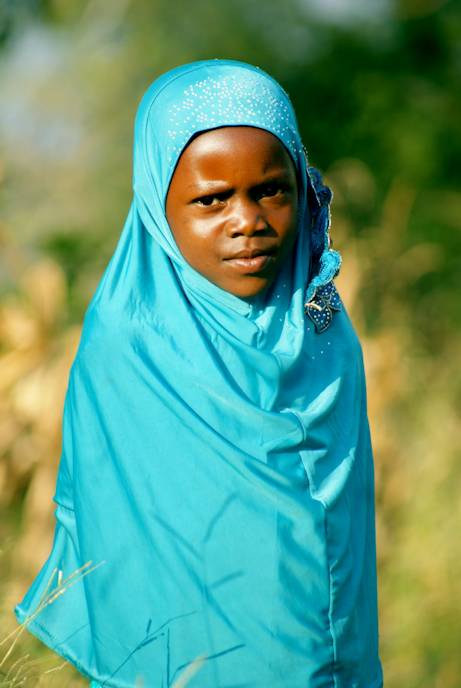 Girls, it must be argued, that they are being discriminated against, exploited, raped, denied equal education, are in forced marriages, are in child-headed families, suffer from hunger, are poverty-stricken, ridiculed, have low citizenship, are forced into prostitution, homeless, are turned into drug-mules, sexually exploited at schools and work-places, and subjected to all social ills. And the question is, what is to be done?
The Gender-Based Violence (GBV)
The African girl child is subjected to all kinds of abuse and in South Africa the buzzword is GBV against women and girl children. This GBV is basically violence against women and children according to South African laws. And is referred to as a secondary pandemic in South Africa (Minisini, 2021). This is so serious that the newspaper report revealed that on average 137 women are killed by a member of their family globally (Nkosi, 2021). That statistic was also shared by Phumzile Mlambo-Ngcuka who served as the United Nations Women’s executive director until recently. In South Africa alone, within a three months period more than 9 500 women were raped whilst a total 13 000 were assaulted (Khan, 2022). Research findings also estimated that one in two women will experience domestic violence from their current or previous intimate partner in their lifetime. Violence against women and girls negatively affects their self-esteem which in turn has negative consequences on their development (Stark, 2018). It is actually disheartening, that violence against women and girls persists in South Africa, despite the historic Beijing International Conference 1995 in China on women having prioritized the girl child as among the top eight priorities needing urgent attention and support of everybody.
Girls economic exclusion
African women still face serious exclusion from the economic processes in most countries including South Africa. Progress has been made in the world on gender equality in the labour markets, but in Africa, progress is still limited and this is due to poverty and gender discrimination (Woldemichael, 2020). In most African countries, women are still forced to work at the family farm or in household enterprises and as a result, do not have access to the mainstream country economy. They remain the worst exploited workforce in society. It has become a common occurrence that for women to make it into certain high positions in the work-places, they are forced to curry sexual favours to male bosses (Jones, 2020:40).
Women still find it very hard to navigate the world of business as there are numerous obstacles which include some that are placed by men. Some of the obstacles that worsen the exclusion of women in business are due to how women have been socialized to accept the status (Desai; 2020).
Despite the economic exclusion that African women face, Ghana has the percentage of women owning businesses with 46.4% of all businesses in that West African country! A World Bank report also revealed that Africa is among one of the highest regions for female entrepreneurs in the world at 27% followed by Europe at 24% and the Asia Pacific at 13% (Desai; 2020). This illustrates that women may be excluded from jobs and business opportunities based on their gender, but these statistics show that they have as much potential as men, if given the same chance. Economic exclusion is one of the main factors that force the girl-child into prostitution and also make them victims of human trafficking rings (Burg; 2019: 13). This economic exclusion highlights that the negligence of women and girls is mainly structural, socio-economic and mainly perpetrated by male chauvinism.
Harmful cultural and religious practices
In some African countries, the girl child is forced to undergo some harmful cultural practices. These women affected do not have the power to say no. Some of these practices include forced marriages or circumcision, which are detrimental to African women (Msuya, 2020). Most of the African countries still practice witch-hunts where mostly women are the targets. These and other ills perpetuated against women and girls in Africa, are obstacles to the development of the African girl child.
The lack of access to education
 Every child is supposed to have a right to education on the African continent, but that is not often the case as in some societies, the girl child is confined to doing the household chores with only boy children sent to school. According to Kramarae and Spender (2000:601), African girls are often illiterate and undereducated and circumstances often coerce them to take on their mothers’ domestic roles rather than prepare to start their own lives outside the home. It is clear that the high levels of illiteracy among girls, is due to their limited access to education. Women’s lack of access to formal education has been identified as one of the key barriers to their ability to participate fully in the economy and advancement in society (Yarwood, 2012:154). And again, a report from Quartz Africa revealed that women were still not fully represented in higher education in Kenya and South Africa (Akala, 2019). The lack of access to education generally means that most of the women on the African continent will not be able to understand their rights, or fully participate in economic activities and this impedes their development.
Limited participation of women in political and public life
The participation of women and girls in political life is very important in the development of the African girl child in the continent. Their equal participation at all levels of decision-making and political involvement is critical to the achievement of equality, sustainable development, peace and democracy and the inclusion of their perspectives and experiences into the decision-making processes (Mlambo, Kapingura & Meissner, 2019). Half of the world’s population are women, yet there is only an estimated 23% of women participating in politics, that is holding parliamentary seats and senates.
A United Nations report indicated that in Sub-Sahara Area (SSA), the number of women in parliament grew in 2018, with a regional average share at 23.7%, according to the biennial Parliamentary Union (IPU) Map of Women in Politics (Musau, 2019). Despite these challenges in African women’s representation in politics, Rwanda a small and poor country in Africa is a leader in that regard with 63.8% and followed Seychelles and Senegal with women representation in politics of 43.8% and 42.7% respectively (Vetten, 2016). Despite these improvements in women’s representation in politics in Africa, women generally still face under-representation when it comes to political offices (Mlambo, et al, 2019)
The financial systems that perpetuate the discrimination against African Women
Women face challenges when it comes to accessing financial institutions’ services and those that attempt to start business find it hard to fund their business ventures. Globally, women’s access to finance is disproportionately low (Morsy, 2020. Morsy, also reported that in SSA countries, only 37% of females had a bank account, compared with 48% of males, a gap that has only widened over the past several years. Most financial institutions require collateral security if someone is to get a loan and most women do not have significant assets that they can use as collateral. Ndege, Mawa and Juma (2021:65) stated that even though women’s access to credit had improved, the majority of African women still did not have access to credit. In South Africa access to capital from financial institutions is still unequal across the genders with women still having unequal access (International Finance Corporation, 2021). The vision of the Rise of the African Girl Child-Meisiekind campaign inter alia, is to mentally position the African girl child in the financial and economic system so as to also benefit and develop.